Last updated November 22, 2026
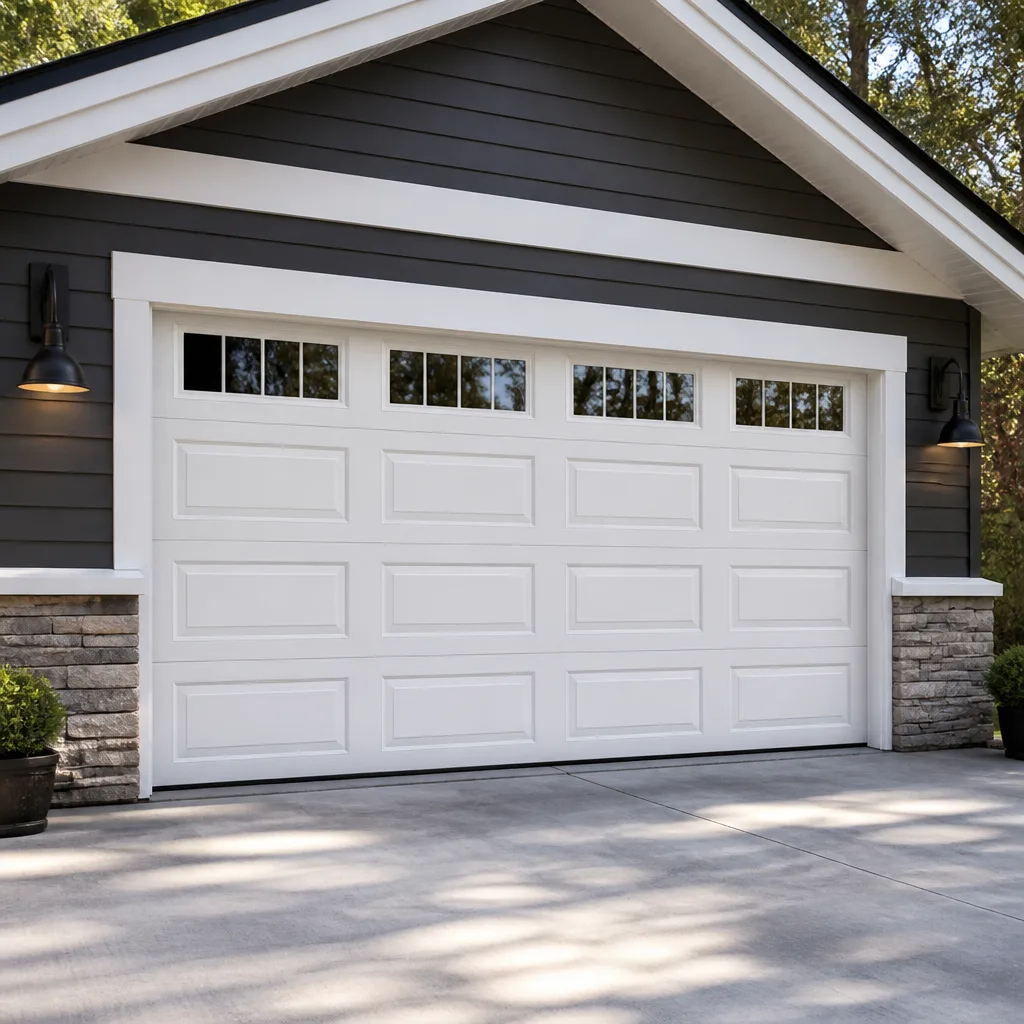 Raised-panel steel
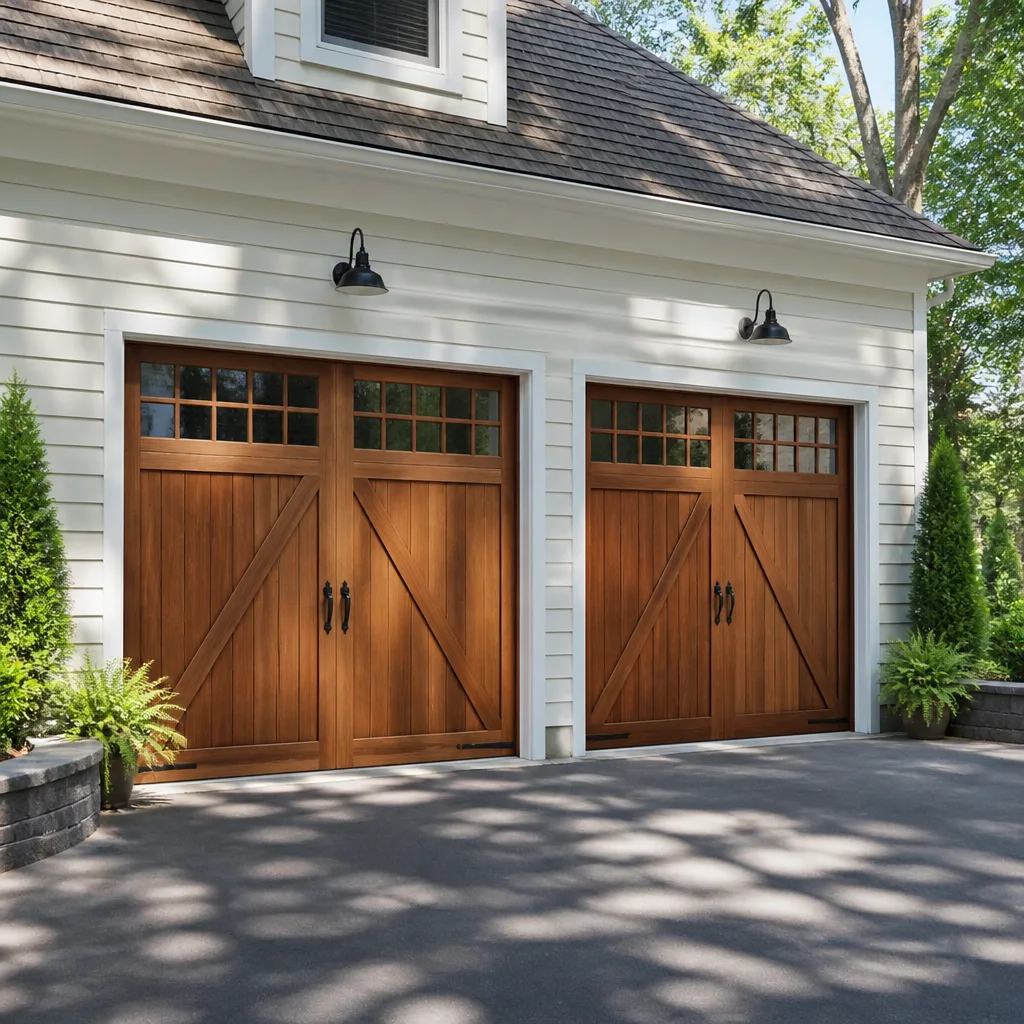 Carriage house
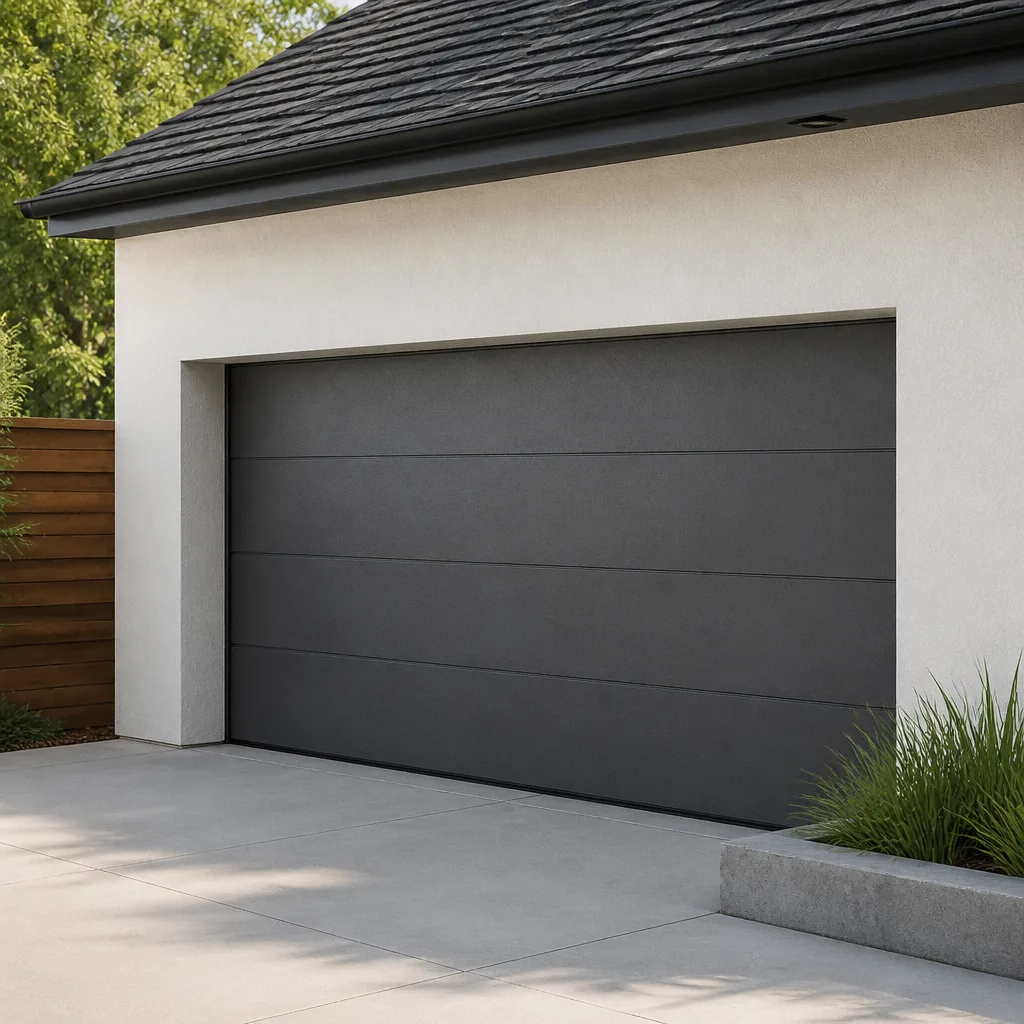 Modern flush
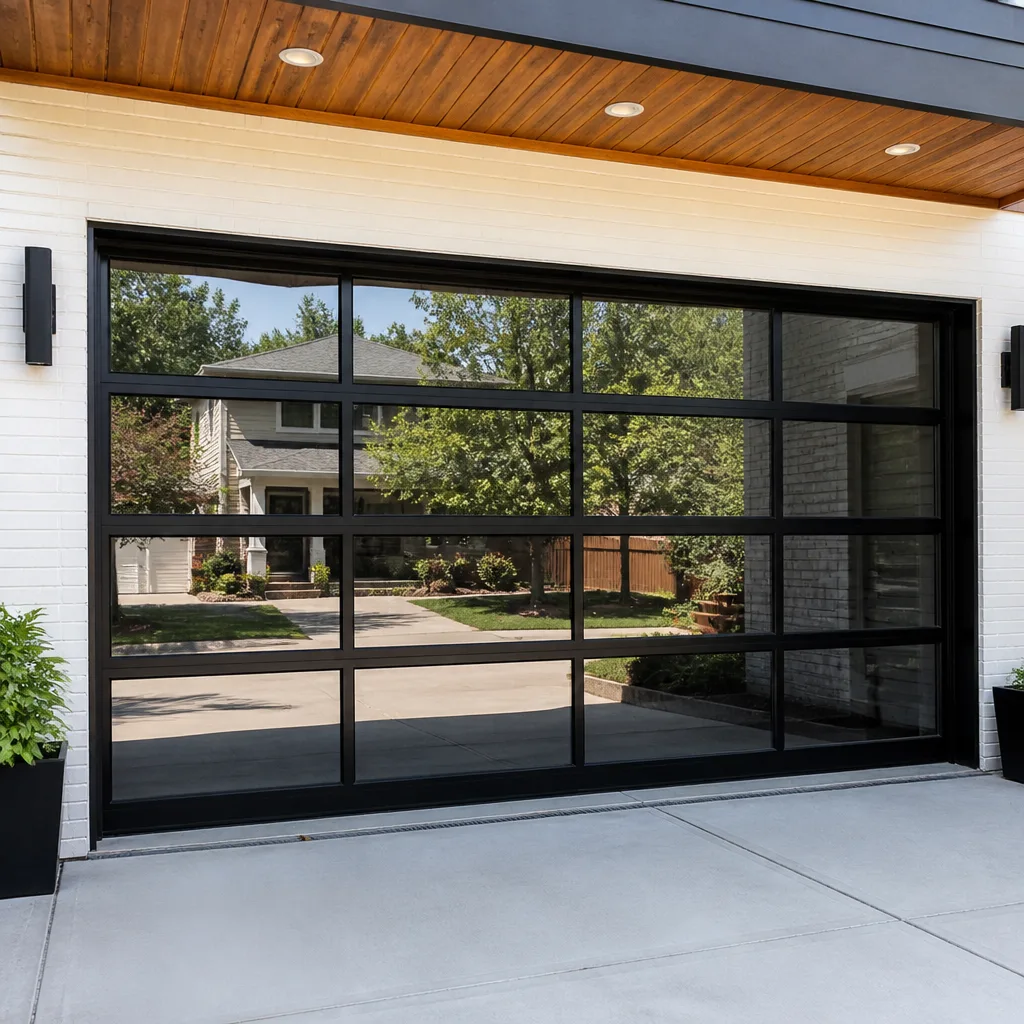 Full-view glass
 LiftMaster openers
 Chamberlain openers
Full 25-point door and opener safety check with every visit - springs, cables, rollers, tracks, and your LiftMaster or Chamberlain opener included
You get a price before we start. It does not change when the pro arrives.
Get your free estimateGarage Door Warning Signs: A Springfield Homeowner’s Reference Guide
Most garage door failures aren’t sudden. They announce themselves first, just not in a language most homeowners recognize. A door that takes two seconds longer to open than it did six months ago isn’t “just getting old” – it’s a measurable symptom with a specific cause. The squeak you’ve learned to ignore, the gap at the bottom of the panel, the opener that pauses before it moves: these are the early notes. By the time the door quits entirely, a small fix has often grown into a bigger one. This guide walks Springfield homeowners through what to listen for, what to look for in a dim garage, and the exact point where you should stop using the door and call.
Quick Answer
The warning signs of a failing garage door fall into three groups: sounds (grinding, popping, scraping, or a loud bang), visuals (sagging panels, frayed cables, gaps at the springs, worn rollers), and behavior changes (hesitation, reversal, uneven travel). Any single sign of a frayed cable or a broken spring means stop using the door and call a professional – those components are under extreme tension and are genuinely dangerous. In Springfield, our dry summers and freezing winters speed up wear on rollers, cables, and springs, so seasonal inspection matters here.
Styles & brands we work with
- Raised-panel steel
- Carriage house
- Modern flush
- Full-view glass
- LiftMaster openers
- Chamberlain openers
Table of Contents
- Sounds That Are Normal Wear vs. Sounds That Mean Stop
- What to Look For on Springs, Cables, and Rollers
- The 60-Second Balance Test
- Opener Behavior Changes and What They Mean
- The Stop-Using-the-Door Threshold
- Why Springfield Seasons Wear Doors Differently
- Brand Matters When Parts Fail
- A Simple Maintenance Routine
Sounds That Are Normal Wear vs. Sounds That Mean Stop
A garage door is a machine with moving parts, and machines make noise. The trick is telling the healthy noise from the warning noise. A low, steady hum from the opener and a soft roll as the door travels are fine. A rhythmic squeak that appears and fades is usually dry rollers or a dry hinge, and it’s a maintenance reminder, not a crisis. Even a light clunk when the door meets the floor can be normal if the travel limit is set correctly.
Other sounds are different. These are the ones that should stop you:
- A loud bang or snap from inside the garage – the classic sound of a torsion spring breaking. The door may still look fine, but it’s now unsupported. Stop using it immediately.
- Grinding that gets louder with each cycle – worn or seized rollers, or a failing bearing plate. Grinding wears metal against metal and spreads damage.
- Popping or snapping as the door moves – often a cable slipping off a drum or a hinge pulling loose.
- Scraping along the floor or frame – the door is out of alignment or a panel is bent.
- A high-pitched whine from the opener head – usually a gear or motor issue inside the unit, not the door.
One useful rule: a new noise that appears suddenly and repeats is worth investigating. A noise that’s been there for years and never changed is more likely cosmetic. The risk with sudden noises in a Springfield garage is that our temperature swings can take a marginal part and finish it off in one cold snap.
What to Look For on Springs, Cables, and Rollers
You can catch most imminent failures with your eyes, if you know where to look. Turn on the garage light – a dim garage hides the exact details that matter – and trace the door’s moving parts from the tracks down to the floor. Here’s what to look for, and how it looks when it’s going bad.
Springs. Torsion springs (the coiled springs on the shaft above the door) should look tight and uniform. Look for a visible gap in the coil – a small space where the spring has separated. That gap means the spring has lost tension or snapped. Extension springs (the ones running along the sides of the door) should have a safety cable running through them. If a spring looks stretched, sagging, or has a smooth, paint-free patch where the coil used to be, it’s on its way out.
Cables. The steel cables run from the bottom corners of the door up to the drums. A healthy cable is taut and tightly wound. A bad one looks frayed at the ends, has broken strands sticking out, or sits slack or off the drum. A frayed cable is a stop-using-it sign – it’s holding serious tension.
Rollers. The small wheels that ride in the track should be round and smooth. Worn rollers are flat-spotted, cracked, or wobbling on their stems. Nylon rollers can also dry out and squeal. A single bad roller puts extra strain on the track and the opener.
Panels and hinges. Look for sagging panels, dents that have bent the door’s edge, or hinges pulling away from the panel. Any of these can throw the door off balance and cause a cable to jump.
If you spot a broken spring or a frayed cable, don’t run the door to “see if it still works.” That’s how a repairable job becomes a bigger one. Our garage door spring repair service exists precisely because those components are the most dangerous part of the system, and they should only be handled by a trained technician.
The 60-Second Balance Test
Here’s a test that reveals whether your springs are losing tension before a full failure – and it takes about a minute. Do it carefully, and only when the door is already in good enough shape to move by hand.
- Disconnect the opener. Pull the red emergency release cord so the door moves freely by hand. Never do this test with the opener still engaged.
- Raise the door to about waist height and let go. A well-balanced door will stay roughly where you left it, maybe drifting a few inches.
- Watch what happens. If the door falls quickly, the springs are losing tension or are undersized. If it rises on its own, the springs are over-tensioned.
- Reconnect the opener by pushing the release lever back until it clicks, and run the door once to confirm normal operation.
When a door fails the balance test, it’s time for a professional look. Here in Springfield, a door that balanced fine in October can start dropping in February because the cold stiffened the grease and the springs lost a little lift. If your door fails this test, book a free estimate rather than waiting for the door to stop. And understand: adjusting torsion springs is not a homeowner job. Those coils hold enough stored energy to cause serious injury, so leave the tensioning to a trained technician.
Opener Behavior Changes and What They Mean
The opener is often the first component to tell you something is wrong, because it’s the part that senses resistance. If you have a LiftMaster, Chamberlain, Genie, or Craftsman opener, the behavior below usually points to a specific cause – and mapping it saves you guessing.
- Hesitation before moving. The opener pauses, then goes. This often means a worn gear, a weakening capacitor, or a bound door that’s fighting the motor. If the door moves freely by hand, the problem is in the unit.
- Reversing for no reason. The door closes partway, then goes back up. That’s almost always the safety sensors – misaligned, dirty, or hit by sunlight. Check that the two small lenses near the floor are clean and facing each other.
- Grinding or a rhythmic clicking from the opener head with the door itself moving fine. That’s typically a stripped gear inside the motor housing.
- Stopping mid-travel and refusing to continue. Could be a travel limit setting, a logic board fault, or a door that’s binding in the track and tripping the motor’s force limit.
- Remote or keypad that works intermittently. Usually a dying battery, a bad wall control, or a radio interference issue. Smart-home integrations using LiftMaster, Chamberlain, or Genie can also lose sync after a router change.
If the behavior only shows up when the door is loaded against resistance, suspect the door before the opener. A door that’s off balance puts extra strain on the motor, and the opener is often blamed for a problem that starts in the springs or tracks. Our garage door opener repair team diagnoses both sides of that equation, so you get the right fix rather than a new opener you didn’t need.
The Stop-Using-the-Door Threshold
Some signs are maintenance reminders. Others are hard stops. Here’s the clear line between “book an appointment” and “don’t touch the door.”
Stop using the door and call today if you see or hear any of these:
- A visible gap in a torsion spring, or a spring that looks stretched across its coil.
- A frayed, slack, or off-drum cable.
- The door is visibly crooked, sagging on one side, or hanging off the track.
- A loud bang followed by a door that feels unusually heavy when you lift it by hand.
- A door that falls fast on the balance test.
- The door hits the floor and bounces, or reverses for no obvious reason.
When one of these happens, the door is no longer safe to operate normally. A door that comes down on a person or a car is a real danger once cables or springs fail. Our garage door repair service covers emergency situations, and a stuck door that’s blocking your garage or your access to the house is exactly the kind of call we respond to.
The signs that warrant an appointment soon, but not an emergency call, are softer: a single noisy roller, a squeak that appears every cycle, a slow opener that still works, or a sensor that needs a quick clean. These are the “book it this week” signs, and the point of catching them is to keep them from tipping into the stop-using list.
Why Springfield Seasons Wear Doors Differently
Springfield’s climate is a factor most garage door guides skip. Summer heat expands metal and softens lubricant, and winter cold tightens everything again. Over a year, a door goes through dozens of expansion and contraction cycles, and the parts that absorb the most stress – the springs, the cables, the seals at the bottom – are the ones that wear first here.
Cold snaps are the real trigger. When temperatures drop hard, a spring that was already near the end of its life can snap, and a door that was balanced in the fall can start dropping in January. In summer, the opposite happens: grease thins out, rollers squeal, and metal parts grind. That’s why the door that behaves in May can fail in February, even if you didn’t change a thing.
The practical takeaway for a Springfield homeowner is to inspect twice a year – once in early fall before the cold sets in, and once in spring after it passes. If you’re watching a door age, our garage door repair team can catch a marginal spring before a cold snap finishes it off, which is almost always the cheaper path.
Brand Matters When Parts Fail
Garage doors and openers are not interchangeable in the way a set of tires is. Manufacturers size and specify their own springs, cables, drums, and hinge plates, and a technician who doesn’t know the brand will improvise. That improvisation is often where a “fix” starts to drift: the wrong spring rate, a substitute bracket, a tune-up that leaves the door out of balance.
Our technicians are factory-familiar with 8 major brands – LiftMaster, Chamberlain, Genie, Clopay, Amarr, Wayne Dalton, Craftsman, and Raynor – which matters for exactly this reason. When you call about a Clopay door that’s binding or a Wayne Dalton door that’s sagging, the technician who arrives already knows how that brand handles loads, how its springs are specced, and where its weak points are. That means the right part instead of a guess, and it means a fix that matches how your door was designed. If you’re considering replacing an aging door rather than repairing it, our Hornbeam Garage Door Repair team handles installation as well as repair, so you don’t need a second contractor.
A Simple Maintenance Routine
Most garage door failures we see are the end of a slow slide that a little routine maintenance would have slowed down. Here’s a maintenance rhythm that fits real life and doesn’t require special tools.
- Monthly: Look at the springs and cables for a gap, a fray, or a slack cable. Test the safety sensors by waving an object in front of them while the door closes.
- Every three months: Wipe down the tracks with a dry cloth and check for debris. Look at rollers for flat spots or wobble.
- Twice a year (fall and spring in Springfield): Lubricate hinges, rollers, and the spring shaft with a garage-door lubricant – not household oil. Run the balance test. Tighten visible hinge bolts.
- After any cold snap or hot spell: Run the door once and listen. A new noise means a new catch.
What you shouldn’t do is try to adjust torsion springs yourself. A lot of homeowners try to “tighten” a spring that looks a little loose, and that’s the single most dangerous mistake in the trade. The springs hold stored energy that can release without warning, and a trained technician with the right bars and knowledge is the only safe path. The rest of the routine above is safe for anyone to do.
Common Mistakes to Avoid
- Ignoring a new noise for months. A grinding roller today is a worn track and a strained opener next quarter. Noise is the cheapest warning you’ll get.
- Calling the opener the culprit first. In our experience, half of “opener problems” are actually a door that’s out of balance. Diagnosing the door first saves money.
- Using WD-40 or cooking oil on the tracks. It attracts grit and makes things worse. Use a garage-door-specific lubricant, and skip the tracks entirely – they should be dry and clean.
- Testing springs or cables with your hands. Here in Springfield, we see far too many homeowners try this. Those components are under serious tension; don’t pull, lift, or tension them yourself.
- Replacing one spring when both are worn. Matched springs usually wear together. Replacing one means the other is likely to fail soon after.
- Assuming a garage door is “just an entrance.” It’s a moving mechanical system under load, and it should be treated like one.
- Waiting until the door won’t move to call. This is the most expensive way to handle it. The earlier you catch it, the simpler the fix.
See the difference
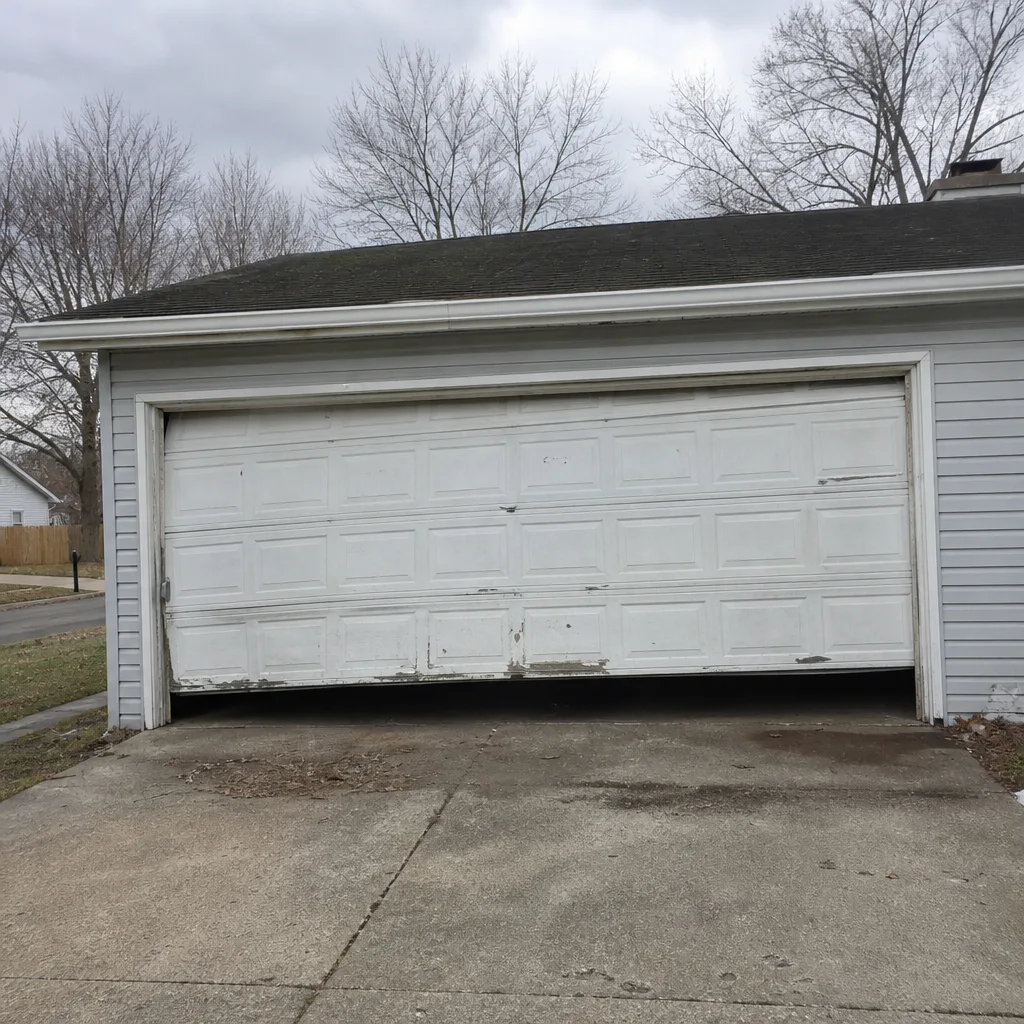 Before
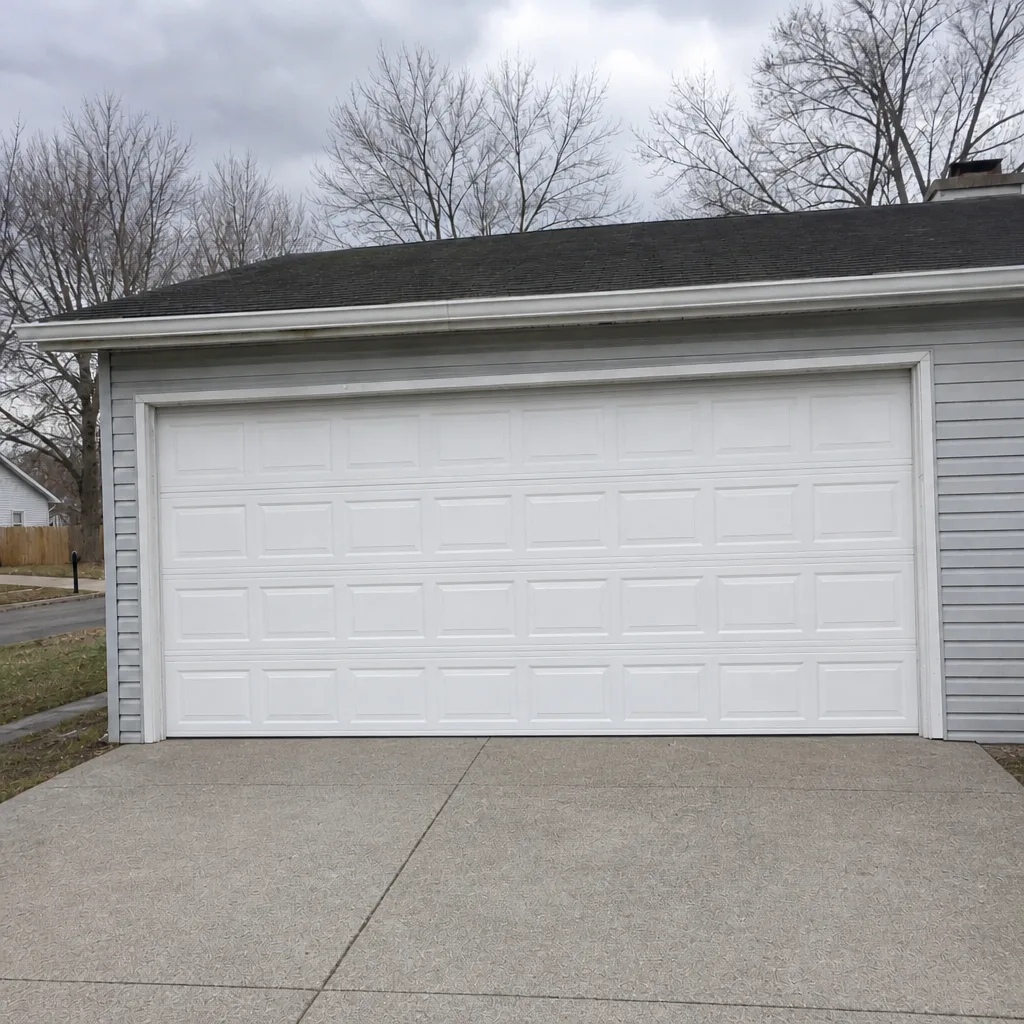 After
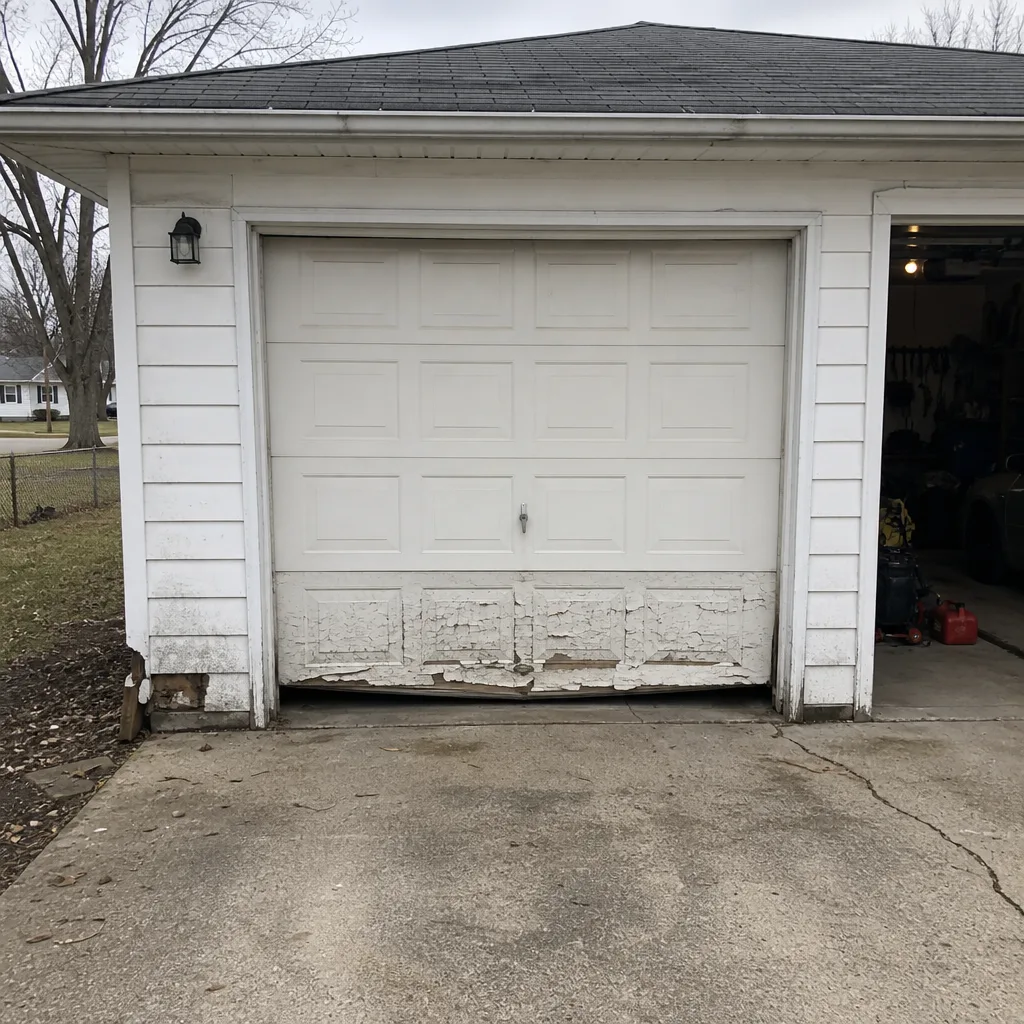 Before
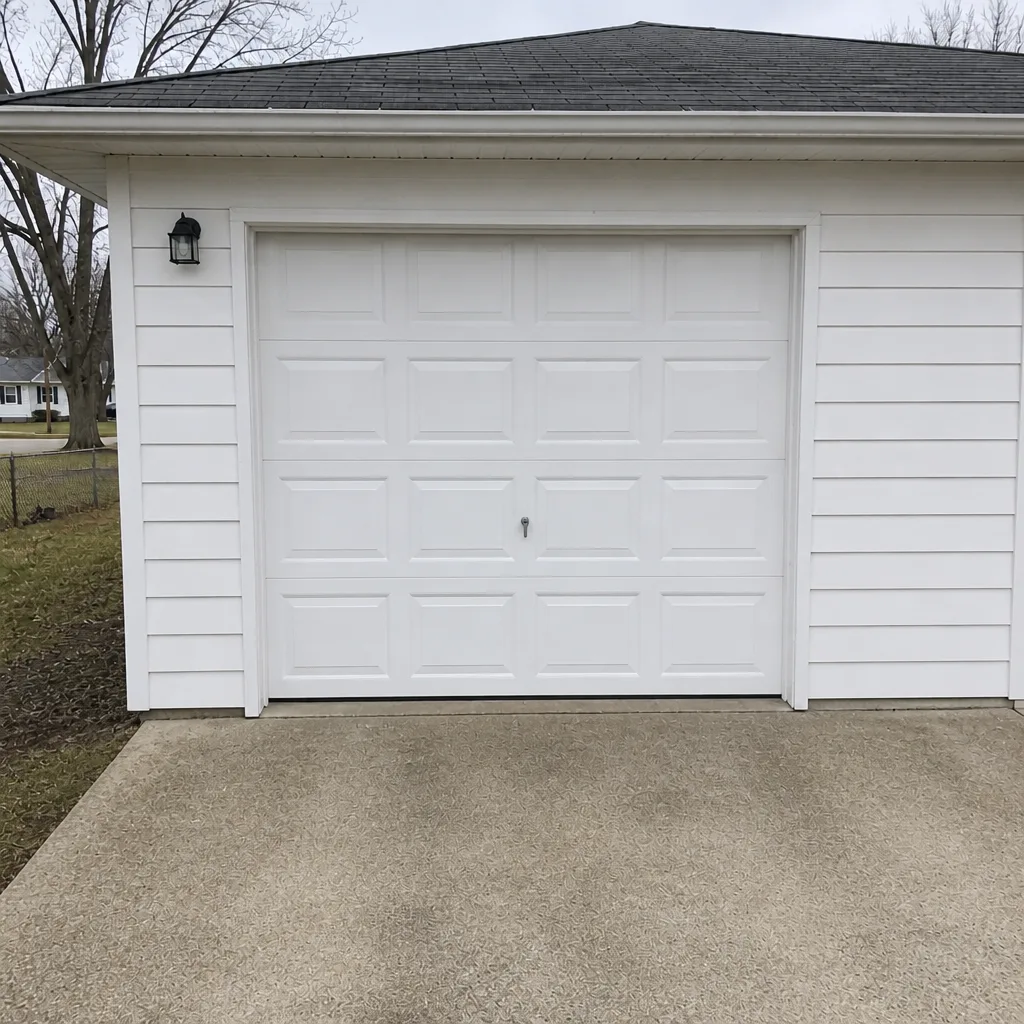 After
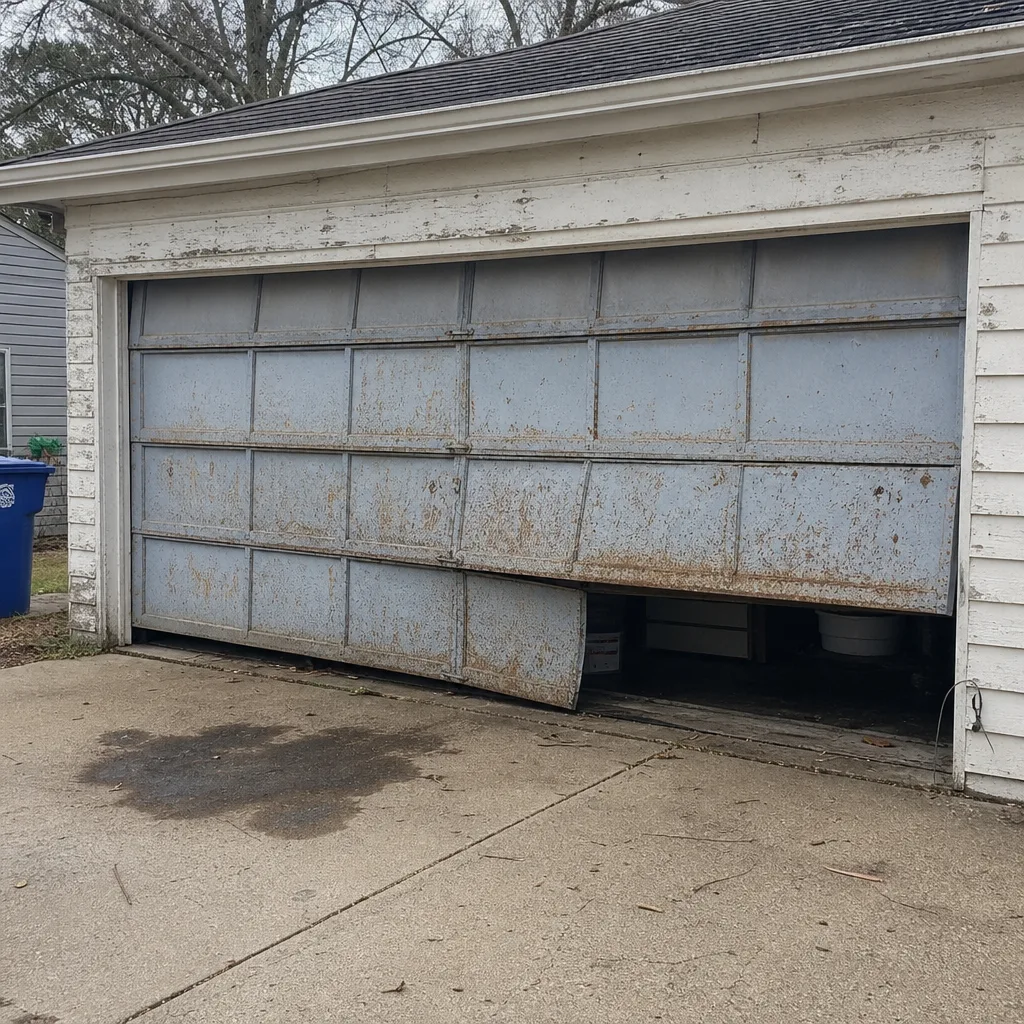 Before
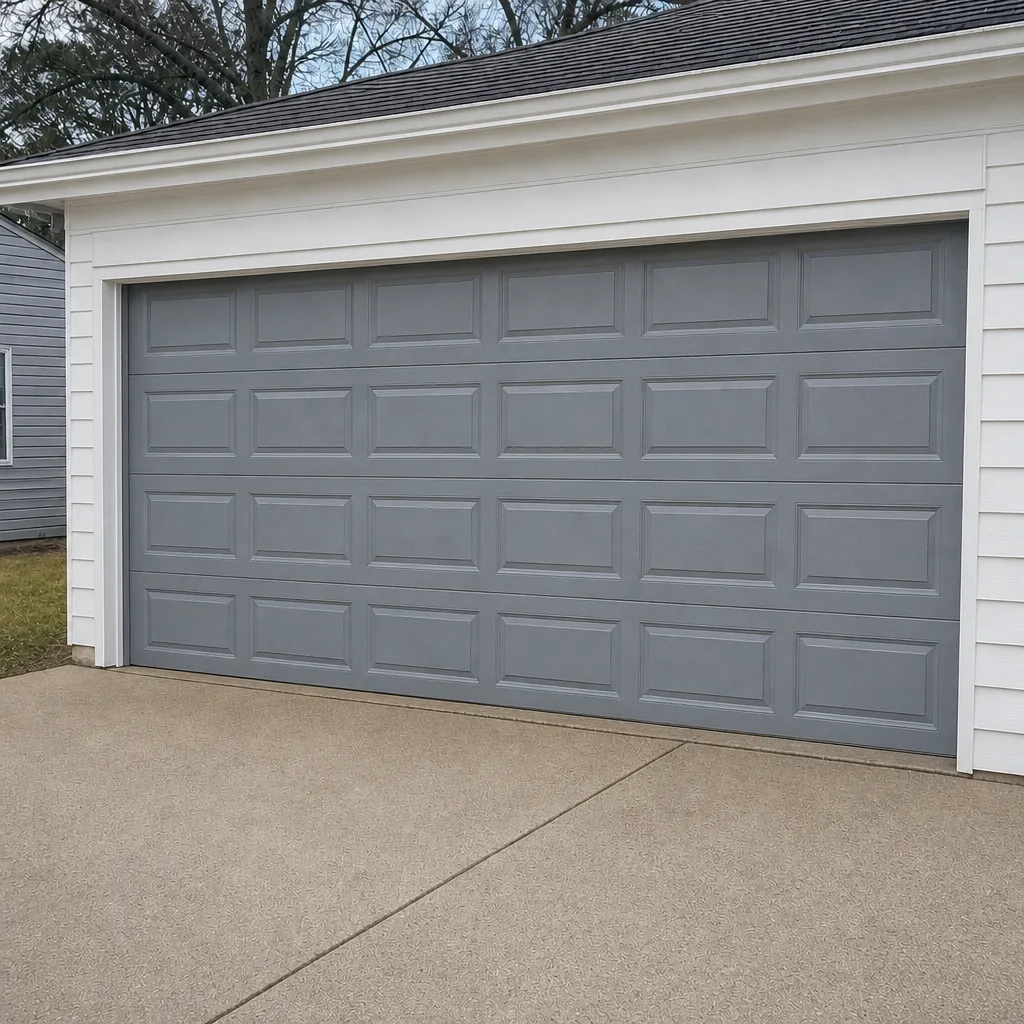 After
When to Call a Professional
Some repairs are worth the call the moment you notice them. A broken spring, a frayed cable, a door that’s off its track, an opener that reverses unexpectedly – these are all cases where the right move is a free estimate, not a weekend project. The same is true if you’re unsure: a technician can tell you in minutes whether your door is in the maintenance-reminder zone or the stop-using-it zone, and you’ll know exactly what needs doing.
Hornbeam Garage Door Repair offers free estimates in Springfield – call (866) 558-6357. We work on every major brand, from springs to smart openers, and our technicians have up to 8 years of experience. If your door has stopped moving entirely, or a stuck door is leaving your home exposed, we offer emergency garage door service so you’re not waiting on a security problem. The estimate is always free, and the price is quoted and agreed before any work starts.
Frequently Asked Questions
The most common warning sign is a balance problem – a door that’s noticeably heavier to lift or takes longer to open than it did a few months ago. In Springfield it often shows up after a cold snap, when springs lose a little lift and the door starts to work against the opener. If you catch it early, a spring or roller service is a straightforward repair. If you wait, the burden spreads to the opener and the tracks, and the job grows. Call (866) 558-6357 for a free estimate.
A typical single-spring repair in the Springfield market runs about $180 to $340, and a matched pair of springs usually costs about twice a single spring since both are replaced together. The final price depends on the spring type, the door’s weight, and the condition of the cables and drums. We quote and agree the price before any work starts, and the written estimate is the price. Call (866) 558-6357 for an exact quote – estimates are free.
Yes, emergency garage door service is available for stuck or broken doors that leave your home exposed or block access. A door that won’t close is a security issue, and a spring or cable failure makes the door unsafe to operate. When you call, describe what happened and whether you heard a bang, and we’ll help you decide whether to wait for a technician or secure the door in the meantime. Call (866) 558-6357.
The local pros we connect you with are licensed and insured as their state requires, and they’re vetted before we send them. We work across all the major brands, so the technician who arrives already knows your door and opener. Our technicians have up to 8 years of experience. If you want to see credentials before booking, ask – it’s a fair question. Call (866) 558-6357 to book a free estimate.
No – the written estimate sets the price. We look at the door, diagnose the actual cause, and quote the job in writing before any work starts. If we find a second problem while working, we stop and talk to you before proceeding, not after. That’s the whole point of an upfront estimate: no surprises and no invoice bigger than the quote. Call (866) 558-6357 to schedule.
A broken spring shows a visible gap in the coil or a stretched, paint-free patch, and the door suddenly feels very heavy. A spring losing tension has no gap yet, but the door fails the balance test – it drops when you let go at waist height. Both warrant a free estimate: a broken spring is a stop-using-the-door sign, and a spring losing tension is the cheaper problem to catch before it snaps. Call (866) 558-6357.
The Bottom Line
Garage doors fail in a predictable order: a sound first, then a visible sign, then a behavior change, then a breakdown. The homeowners who come out cheapest are the ones who treat the early note as a real warning. Noise, a gap in a spring, a frayed cable, a door that fails the balance test, or an opener that hesitates – any one of those is a reason to book a free estimate. In Springfield, the seasonal swings make that twice-a-year check worth it. And if the door has already stopped moving, or you see a broken spring or a frayed cable, stop using it and call us today.
Contact
If you’re seeing any of these warning signs in your own garage, we’re ready to help. Call (866) 558-6357 for a free estimate on garage door repair, spring repair, opener repair, or a new door installation. We work on every major brand, quote and agree the price before any work begins, and stand behind the job until it’s done right. When the door won’t move, we do.
Written by the team at Hornbeam Garage Door Repair.